


How Export Demand Influences Domestic Cardamom Prices in India
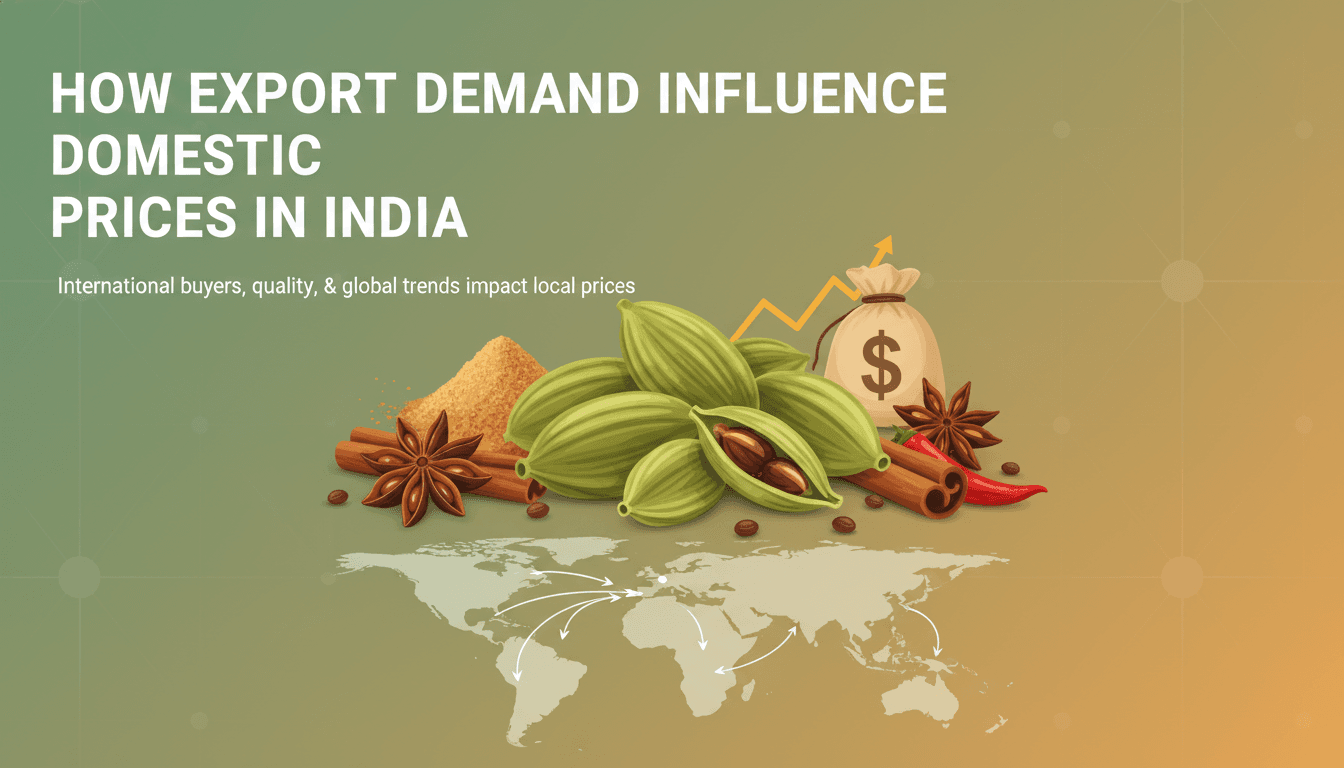
How Export Demand Influences Domestic Cardamom Prices in India
Cardamom prices in India do not move randomly. Every rise or fall has a reason behind it, and one of the most important factors is export demand. While local supply, weather, and auction volumes play a role, demand from international buyers often has a direct impact on domestic cardamom prices. For traders, growers, and buyers tracking cardamom price today, understanding export demand helps in making better buying and selling decisions.
Export Demand and Domestic Cardamom Prices: The Core Connection
Export demand and domestic cardamom prices are closely linked. When overseas buyers increase purchases, a large portion of Indian cardamom moves out of the local market. This reduced availability in domestic auctions often pushes prices upward.
India is a key supplier to the global cardamom market, exporting to countries in the Middle East, Europe, and parts of Asia. When these markets show strong demand—especially during festive or peak consumption seasons—domestic traders face tighter supply. As a result, auction prices rise, directly affecting what sellers receive and what buyers pay.
How Export Demand Shapes Domestic Cardamom Prices in Auctions
Export demand shapes domestic cardamom prices most visibly during auctions. Exporters actively participate in auctions when international orders are strong. This increased competition raises bidding pressure, leading to higher average prices.
For sellers, this can be a good opportunity to realize better margins. For buyers supplying the domestic market, however, higher auction prices may reduce profit or require careful timing of purchases. Watching export trends alongside cardamom price today helps both sides plan their trades more effectively.
Export Demand, Quality Preferences, and Domestic Cardamom Prices
Export demand and domestic cardamom prices are also influenced by quality requirements. International buyers usually prefer premium grades with strong aroma, uniform size, and proper curing. When export demand increases for high-quality lots, these grades see sharper price gains in the domestic market.
This is where factors like cultivation practices and organic cardamom benefits become relevant. Organic and well-processed cardamom often attracts higher export interest, which in turn supports better domestic pricing for growers producing premium quality.
Global Market Trends Affecting Export Demand and Domestic Cardamom Prices
Changes in the global cardamom market directly affect export demand and domestic cardamom prices. Currency movements, import policies of buyer countries, and competition from other producing nations can influence export volumes.
If export demand slows due to global economic conditions, more stock remains in the domestic market, which may soften prices. Conversely, strong global demand tightens local supply and supports price stability or growth. Sellers and buyers who follow global trends gain an advantage in anticipating market movements.
Conclusion: Why Export Demand Matters for Sellers and Buyers
Export demand plays a vital role in determining domestic cardamom prices in India. For sellers, strong export demand can mean better auction realizations. For buyers, it highlights the importance of monitoring international trends along with daily auction data.
By understanding how export demand, auction activity, and the global cardamom market interact, traders can make informed decisions rather than reacting to short-term price changes, leading to smarter and more confident participation in the cardamom trade.