


The History of Cardamom — From Ancient Egypt to Modern Kitchens
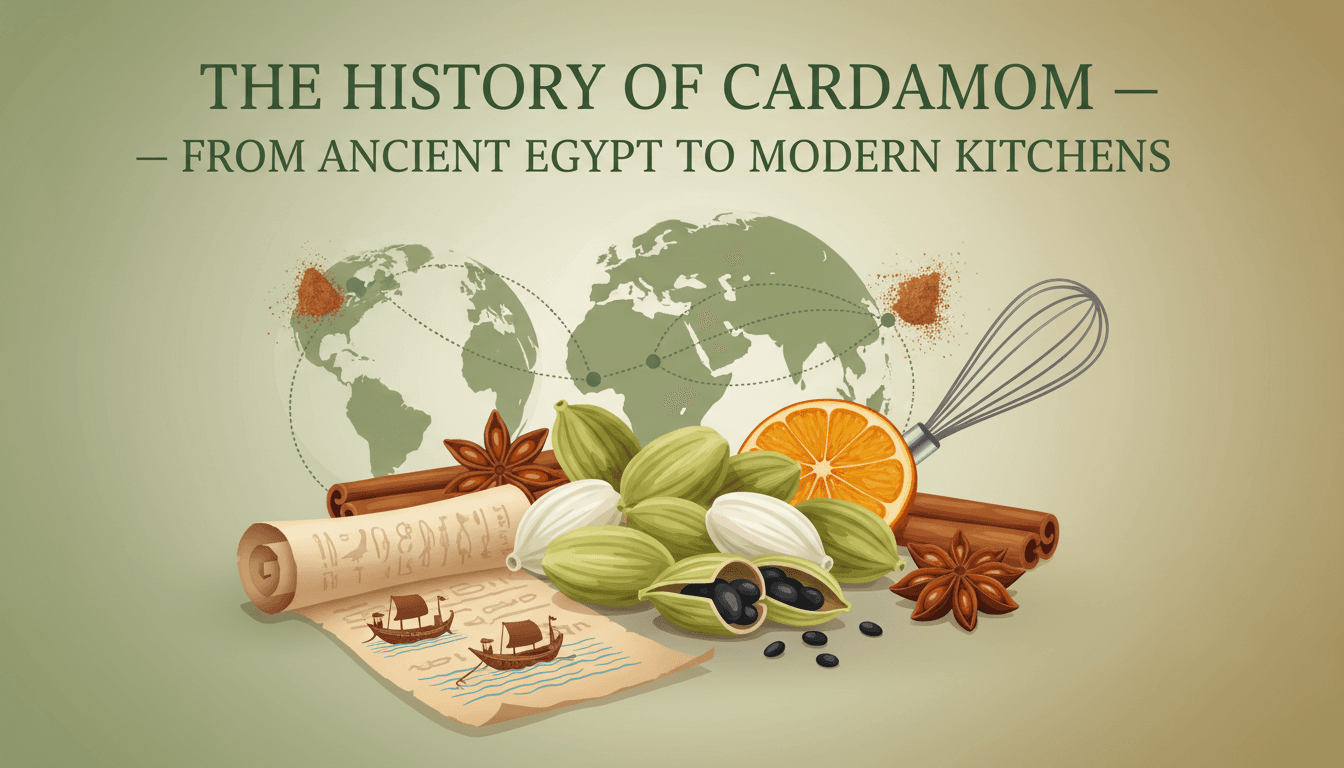
Cardamom has travelled a long way from the forests of South India to kitchens around the world. Known for its sweet aroma and warming flavour, this spice has been valued for centuries by traders, healers, and cooks alike. Its long journey and growing worldwide demand have helped shape what we now know as the global cardamom market.
Early Use and Ancient Civilisations
The origins of cardamom are traced to the tropical forests of the Western Ghats in southern India. It was used in ancient India not only as a spice but also in traditional medicine and rituals. Ancient Ayurvedic texts mention cardamom (sometimes referred to with old terms) for its therapeutic properties, especially related to digestion and general well-being.
Centuries ago, traders carried cardamom beyond its native lands. It found its way to ancient Mesopotamia — for instance, according to historical records, the king of Babylon kept cardamom among other herbs in his royal gardens.
From there, the spice gradually reached the Mediterranean and classical civilizations. In ancient Greece and Rome, cardamom was appreciated for its aroma, flavour, and medicinal uses. Physicians and scholars of that era recommended it for digestion and respiratory health, and its use extended to perfumes and scented oils.
Thus, cardamom became one of the earliest globally traded spices, valued not only for cooking but also for healing, fragrance, and luxury.
Cardamom in Medieval Trade
As trade routes across land and sea expanded, especially between South Asia, the Middle East, and Europe, cardamom became a luxury commodity. Arab traders played a pivotal role: they introduced cardamom to the Middle East and facilitated its spread to other regions beyond Asia.
During that period, spices like cardamom, cinnamon, cloves, and pepper were among the most sought-after goods — expensive, exotic, and status symbols. Cardamom’s high value made it a prized item in spice markets, and this early demand laid the foundation for what we now recognize as the global cardamom market.
By medieval times and even later, cardamom entered kitchens, trade caravans, and markets across continents. Its luxury status continued, but gradually it became more widely available as cultivation expanded.
Cardamom in Modern Kitchens
Today, cardamom is grown commercially across different parts of the world — especially in India and in Central America (notably in Guatemala).
In modern kitchens around the globe, cardamom is a versatile spice. It flavours tea, coffee, desserts, sweets, curries, and savoury dishes. In many households, it is also valued for its natural fragrance and potential wellness benefits — a tradition that traces back to its ancient medicinal use.
Because cardamom pods preserve flavour and aroma longer than ground seeds, many chefs and home cooks still prefer the whole pod form — echoing the traditional way of using cardamom for maximum fragrance and taste.
Moreover, as global trade and demand evolved, different regions adapted cardamom to their local cuisines. This flexibility helped cardamom remain relevant — from medieval trade spice to everyday kitchen staple worldwide.
Conclusion
From ancient temples to modern homes, cardamom has kept its charm through the ages. Its history explains why the global cardamom market continues to grow and why tracking the cardamom price today remains important for buyers and sellers.