


Peak Season vs Off-Season Cardamom Prices: What Traders Should Know
Peak Season vs Off-Season Cardamom Prices: What Traders Should Know
Cardamom prices rarely stay the same throughout the year. For sellers and buyers, understanding how prices move during different seasons is essential for making smart trading decisions. Since daily cardamom auction prices guide much of the market activity, knowing the difference between peak season and off-season pricing can help traders plan better.
Understanding Peak Season vs Off-Season Cardamom Prices
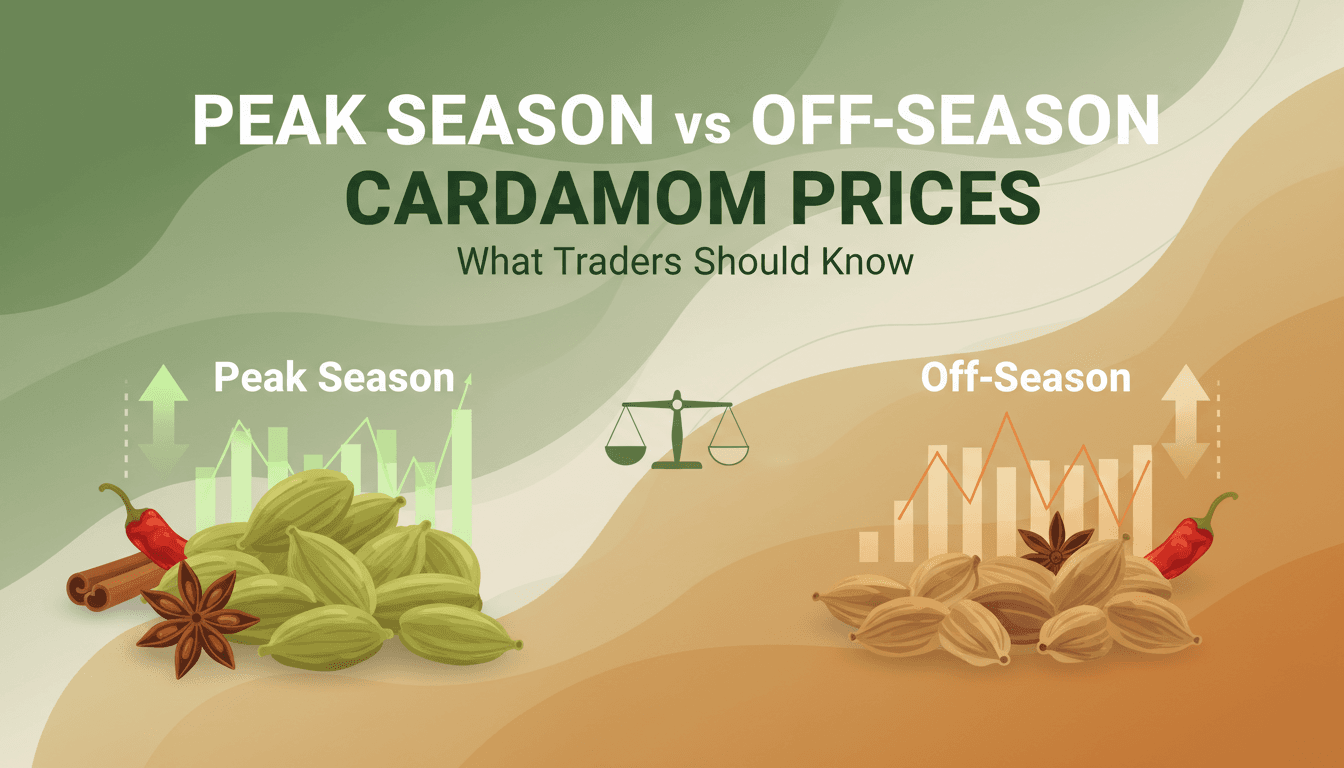
The peak season vs off-season cardamom prices mainly depend on harvest cycles and market arrivals. Peak season usually coincides with fresh harvests, when supply is high and cardamom reaches auction centers in large quantities. During this time, prices may stabilize or soften depending on demand.
In contrast, off-season periods see limited arrivals. With lower supply in the market, prices often become volatile. Traders tracking peak season vs off-season cardamom prices closely can spot opportunities—either to sell at higher rates or to stock up for future demand.
How Peak Season vs Off-Season Cardamom Prices Affect Sellers
For growers and sellers, peak season vs off-season cardamom prices play a crucial role in deciding when to release stock. During peak season, even though volumes are high, competition among sellers can put pressure on prices. Sellers who follow cardamom auction price trends daily can choose to sell selectively rather than rushing to market.
In the off-season, reduced supply often supports stronger prices. Sellers with good-quality stock may benefit by waiting for off-season demand, especially when export interest or domestic consumption rises. Monitoring cardamom price today helps sellers make timely decisions.
How Peak Season vs Off-Season Cardamom Prices Impact Buyers
Buyers also need to understand peak season vs off-season cardamom prices to manage costs. Peak season can be a good time for bulk buying, as availability is higher and prices are more predictable. Many traders secure inventory during this period to meet future requirements.
During the off-season, buyers often face price fluctuations due to limited supply and changing demand. Keeping track of daily cardamom market price movements helps buyers avoid overpaying and plan purchases strategically, especially in a competitive trading environment.
Market Factors Influencing Seasonal Cardamom Prices
Several factors influence peak season vs off-season cardamom prices, including weather conditions, crop quality, demand from domestic and international markets, and trends in the global cardamom market. Auction arrivals, stock levels, and buyer participation also impact price movements.
Traders who regularly analyze cardamom price trends and auction data gain a clearer picture of market direction. This information supports better planning for both short-term trades and long-term storage decisions.
Conclusion: Making Smarter Decisions with Seasonal Price Insights
Understanding peak season vs off-season cardamom prices gives traders a clear advantage in the market. Sellers can choose the right time to release stock, while buyers can plan purchases more efficiently. By following daily updates like cardamom price today and watching auction trends, traders can respond quickly to market changes.